

Movement has always meant a lot to me.
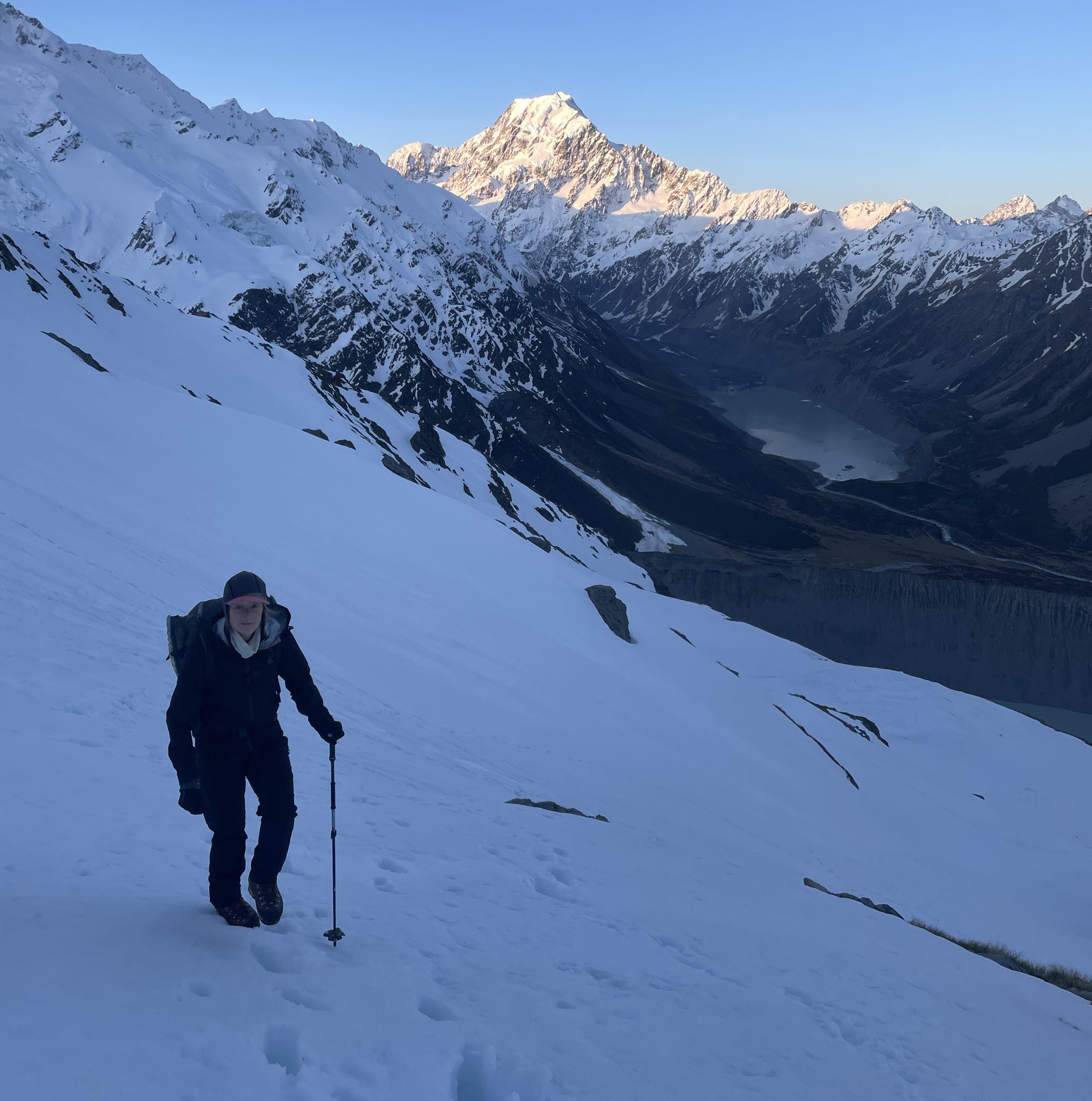
I’m a lifelong athlete. I played team sports growing up, and as an adult, I’ve trail run, big hiking skied, cycled, occasionally rock and mountain climbed, loved HIIT and strength training workouts, wielded chainsaws, power tools, and done plenty of manual labor.
I just like to move.
And movement has also become one of the places where I’m learning some of my deepest lessons about myself.
And recently, I realized I’ve been carrying a sentence around with me for over twelve years.
About twelve years ago, I joined an indoor soccer league with a friend and colleague.
I’d torn my ACL and MCL playing soccer in high school and had two surgeries, but by then I’d been active for years. I hiked. I trail ran. I cycled. I felt recovered. I’d moved a lot since then.
One night, I arrived late to a game. No warm-up. I went straight onto the field.
Halfway through, something in my quad didn’t feel right. I finished the game, but it continued bothering me, so eventually I went to see a doctor.
I told him my history.
As he examined me, moving my hips and knees, he said:
“Wow, you’re so out of balance. If you don’t fix this, you’re going to continue to injure yourself.”
Twelve years later, I can still hear those words like it was yesterday.
At the time, I don’t think I realized the meaning I had made from them.
This is my fault.
My body is broken because I didn’t fix it.
And if I don’t get this right, I’m going to hurt myself again.
The complicated part is that since then, I’ve accumulated evidence.
I eventually needed hip surgery after an impingement and shredded labrum. There was significant bone growth on the head and neck of my femur that had damaged the cartilage in my hip.
Then came another bone spur - this time in my knee - which grew through cartilage and tore my meniscus.
That required two more surgeries, including cartilage repair.
My surgeon told me recovery would take at least a year before I ran again.
I thought, I’ll do it faster.
Of course I did.
I’ll be really good at PT.
I’ll address my sleep.
My nutrition.
My stress.
I’ll do the work.
And somewhere underneath all of that was a belief I didn’t recognize at the time:
If I do everything right, I will recover.
And if I don’t?
Maybe I’ve failed.
I’m now just over two years post-op.
I’m still seeing my physical therapist.
I could probably have started running again a year ago. But when I tried, I developed Achilles pain on my non-surgical side. Then lower back pain. Then shoulder pain.
My body had adapted.
It had become incredibly good at adapting, actually.
Maybe too good.
And now I’m asking it to adapt again.
Not simply so I can run.
So I can find a new kind of balance, my new ‘normal’.
Over the last year, I’ve started bringing other perspectives into my recovery.
I worked with a hypnotherapist because I sensed something was keeping me from trusting myself in movement.
I’ve started EMDR because I realized this wasn’t only about muscle strength or mobility.
There were experiences I hadn’t processed.
The original injury.
The doctor telling me I was so out of balance that I’d keep injuring myself.
Another practitioner telling me my hips looked so bad I should never do certain movements.
And, more recently, seeing an X-ray and hearing my surgeon casually point out another bone spur at the end of my femur.
The last time a bone spur grew there, I needed two surgeries.
We moved on with the appointment.
I’m not sure my nervous system did.
I’ve begun exploring neurofeedback, too, because I’m realizing just how well my nervous system has learned to scan for pain.
To anticipate injury.
To protect me.
And I’m beginning to understand that my recovery isn’t only about getting stronger.
It’s about developing a different relationship with my body.
With myself
And with what’s possible.
This is where my physical recovery unexpectedly intersects with the work I do with leaders.
For a long time, I placed a tremendous amount of authority outside myself.
A doctor would fix me.
A physical therapist would tell me what I should be able to do.
Someone else would determine whether I was recovered.
I needed their expertise - and I still do.
But needing expertise isn’t the same as giving away my authority.
That’s the distinction I’m learning.
Today, when I work with a practitioner, I tell them what my goals are.
I don’t wait for them to define recovery for me.
I ask questions.
I notice what my body is telling me.
I bring in their expertise.
I decide what fits, where I still have questions.
We work together.
I can be my own authority and still need other people.
Maybe that’s what partnership actually is.
I see this with leaders all the time.
Especially when we’re in transition.
Something changes and suddenly we’re looking everywhere for the answer.
The book.
The podcast.
The expert.
The consultant.
The next framework, the next role, a new company.
Someone who can tell us what we’re supposed to do.
I’ve done this, too.
But perhaps the work isn’t finding someone who has the answer for us.
Perhaps it’s finding people who can help us hear ourselves again.
A guide.
A practitioner.
A thought partner.
A mirror.
Someone who can bring experience and perspective without asking us to hand over our own authority.
I’m also realizing how much one experience can shape the way we relate to ourselves long after the experience is over.
A sentence.
A diagnosis.
A piece of feedback.
A decision someone made about us.
Something a boss or colleague said.
Something a doctor said.
Something we interpreted as evidence that we weren’t enough, weren’t capable, weren’t ready, weren’t doing it right.
And sometimes the experience isn’t what’s still leading us.
The meaning we made from it is.
That’s what I’m recognizing in myself.
I made meaning from that doctor’s words.
And because life subsequently gave me plenty of injuries and surgeries, I could keep finding evidence that the meaning was true.
See? You’re going to hurt yourself again.
That’s a powerful loop.
And recognizing it doesn’t magically make it disappear.
It gives me the opportunity to relate to it differently.
And that changes where I locate my power.
That’s the practice I’m in now.
When I notice myself slipping into shame or feeling like a victim of the circumstances of my body, I try to notice it.
Not perfectly.
I come back to myself.
What’s happening here?
What am I learning?
What do I want?
What can I choose now?
Then I practice.
And inevitably I don’t get it right.
So I notice again.
What did I learn?
What might I do differently next time?
And I practice again.
That’s why it’s called a practice.
And I’m discovering there is a kind of freedom in this.
Not freedom because everything turns out the way I want it to.
My body may still hurt. I may still get injured. Something I try may not work. I don’t get to control all of that.
The freedom comes from knowing I don’t have to make those experiences mean something about who I am.
I can name what’s happening out loud.
I can get curious instead of defeated - something a mentor has reminded me to practice when things don’t turn out the way I hoped.
I can ask: What is this showing me? What do I need now? What might I try next?
And I can choose again.
There’s something incredibly liberating about maintaining our own authority this way.
It gives us permission to be ourselves.
To be messy.
To be brilliant and imperfect.
To need help without believing we need to be fixed - or giving away our authority in the process.
To practice with all of who we are as we move through this one life.
Maybe that’s part of what becoming more fully ourselves actually looks like.
There’s another reason I wanted to share this story.
Freedom doesn’t mean doing it alone.
Recovery can be lonely.
Transition can be lonely.
Leadership can be lonely.
We can convince ourselves we’re the only person experiencing whatever we’re experiencing.
And we don’t have to carry all of it alone.
Sometimes we need someone who feels safe enough that we can finally say the thing out loud.
Someone who can be a mirror.
Someone who can help us see what has become difficult to see alone.
I’ve found some of those people in this season.
And I know I’ll continue finding different people throughout my life.
Not because I’m giving them the power to heal me.
Because I’ve chosen to have partners in my healing and growth while remaining an active participant in it.
I’ve been thinking a lot lately about what regenerative leadership means in practice.
I’m beginning to think part of it is this.
Not returning ourselves to some previous version of who we were.
Not fixing ourselves so we can get back to “normal.”
But developing a different relationship with ourselves and our experiences - one that leaves us with greater capacity, choice, and freedom than we had before.
Maybe regeneration isn’t about returning to what was. Maybe it’s asking:
How do we leave something - an environment, a relationship, a system, our minds, even our bodies - with greater capacity for life than it had before?
Today, for me, perhaps leaving something better simply means saying this out loud.
Putting it into the world.
Opening a little more surface area for a conversation someone else might need, too.
Maybe you recognize yourself in some part of this.
Maybe you know someone who would.
Maybe you’re navigating a transition in your leadership, your career, your body, or another part of your life and realizing how much you’ve been carrying alone.
I don’t think the invitation is to stop asking for help.
Quite the opposite.
Maybe it’s to consider what it would feel like to receive support without giving yourself away.
To work with someone who respects your goals.
Who offers perspective without claiming authority over your experience.
Who helps you recognize what you already know but haven’t quite been able to see.
To be supported - and still belong to yourself.
If you’re navigating a transition and this brought something up for you, you’re welcome to reply. I read every note.
Had the Founding Fathers of America come in our generation, they wud have secured our freedom to "PRACTICE." The rights of the individual to practice shall not be infringed. Now I think we need a Constitutional Amendment...